
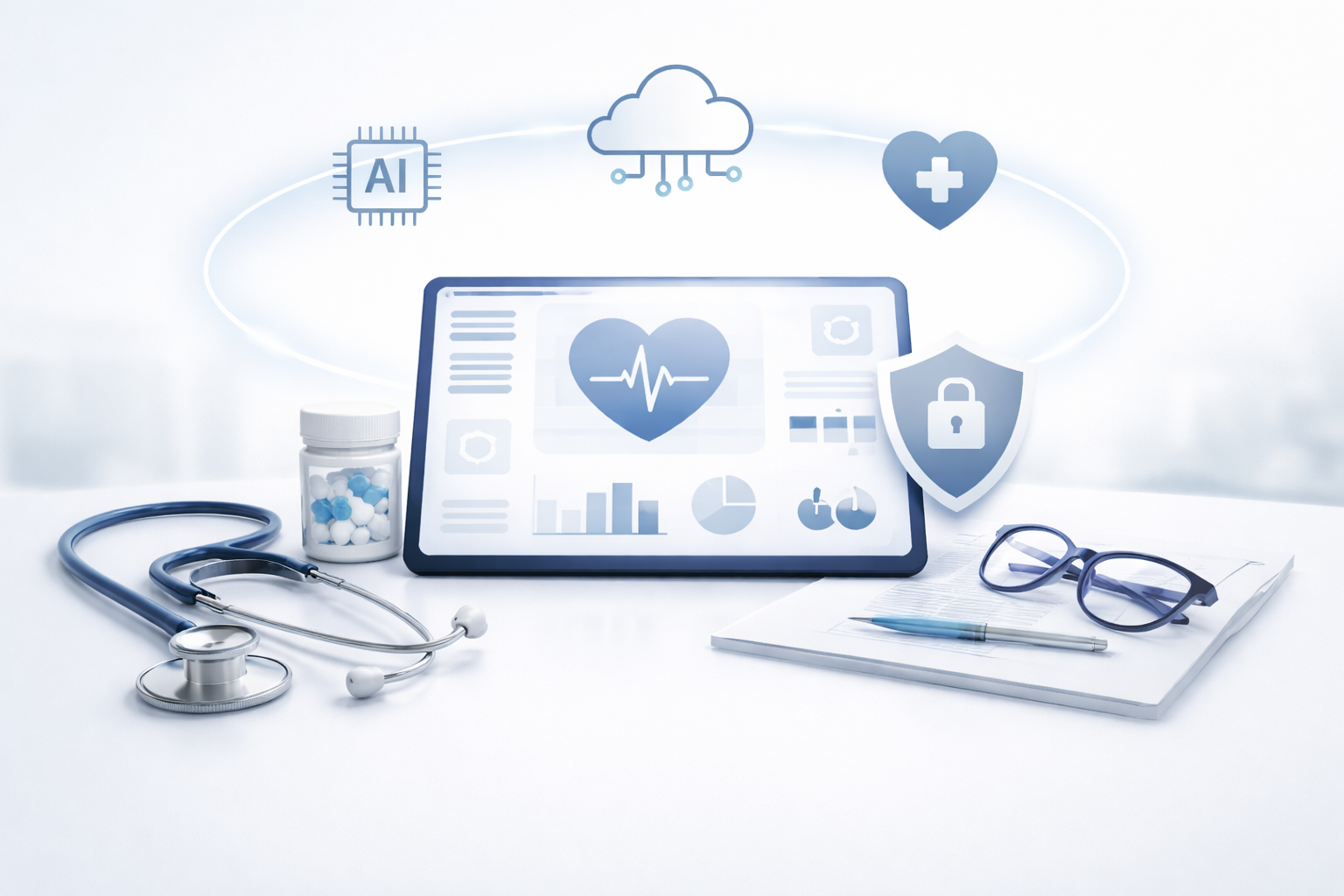
The healthcare industry is undergoing one of the most significant digital transformations in history. Driven by artificial intelligence, cloud computing, and data analytics, modern healthcare technology solutions are redefining how care is delivered, monitored, and optimized.
According to Grand View Research, the global digital health market was valued at over $211 billion in 2022 and is projected to grow at a compound annual growth rate (CAGR) of more than 18% through 2030. This rapid growth reflects the urgency for scalable, secure, and intelligent healthcare systems.
AI in Healthcare: From Reactive Treatment to Predictive Care
Artificial Intelligence (AI) in healthcare is transforming clinical and operational decision-making.
Recent research by Accenture estimates that AI applications could save the U.S. healthcare economy up to $150 billion annually by 2026 through improved efficiency and automation.
AI-powered healthcare software development enables:
- Predictive analytics for disease detection
- AI-assisted diagnostic imaging
- Automated clinical documentation
- Risk scoring and patient triage
Healthcare organizations adopting AI-driven systems are shifting from reactive care models to predictive and preventive strategies.
Cloud Computing in Healthcare: The Foundation of Scalable Infrastructure
Legacy on-premise systems are increasingly being replaced by secure cloud computing in healthcare environments.
According to MarketsandMarkets, the healthcare cloud computing market is expected to reach $89 billion by 2027, driven by demand for:
- Interoperable patient record systems
- Real-time data access
- Scalable storage solutions
- Disaster recovery capabilities
Cloud-native healthcare IT infrastructure allows organizations to improve operational efficiency while maintaining compliance with healthcare data security standards.
Telemedicine and Remote Patient Monitoring Are Redefining Care Access
The COVID-19 pandemic accelerated the adoption of telemedicine technology worldwide.
McKinsey reports that telehealth utilization stabilized at levels 38 times higher than pre-pandemic baselines.
Remote patient monitoring systems now enable:
- Continuous biometric data collection
- Real-time health tracking
- Reduced hospital readmissions
- Expanded rural healthcare access
Digital transformation in healthcare is no longer centered around facilities — it now extends directly into patients’ homes.
Healthcare Data Security and Compliance: A Strategic Imperative
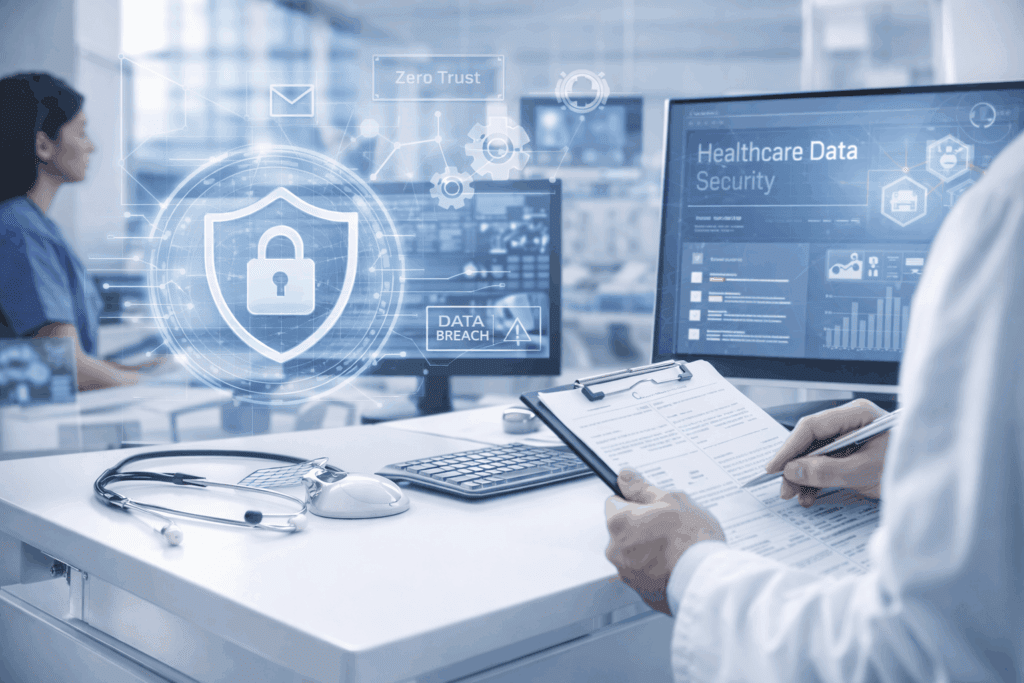
Healthcare data remains one of the most targeted categories for cyberattacks.
IBM’s Cost of a Data Breach Report consistently ranks healthcare as the industry with the highest average data breach cost, exceeding $10 million per incident in recent years.
Secure healthcare software development must incorporate:
- End-to-end encryption
- Role-based access controls
- Zero-trust architecture
- Continuous infrastructure monitoring
Technology innovation without cybersecurity alignment exposes organizations to systemic risk.
How SeacomSoft Delivers Secure Healthcare Technology Solutions
At SeacomSoft, we specialize in healthcare software development and digital transformation initiatives that combine:
- AI-powered analytics
- Secure cloud computing infrastructure
- Custom healthcare application development
- Scalable system architecture
Our approach prioritizes:
- Compliance-first engineering
- Security by design
- Performance optimization
- Long-term scalability
We build healthcare technology solutions that are not only innovative but operationally resilient.
Conclusion: The Strategic Future of Healthcare IT
Healthcare digital transformation is accelerating globally. Organizations investing in AI, cloud computing, and secure IT infrastructure today will define tomorrow’s care delivery models.
Healthcare technology is no longer a support function, it is a competitive advantage.