
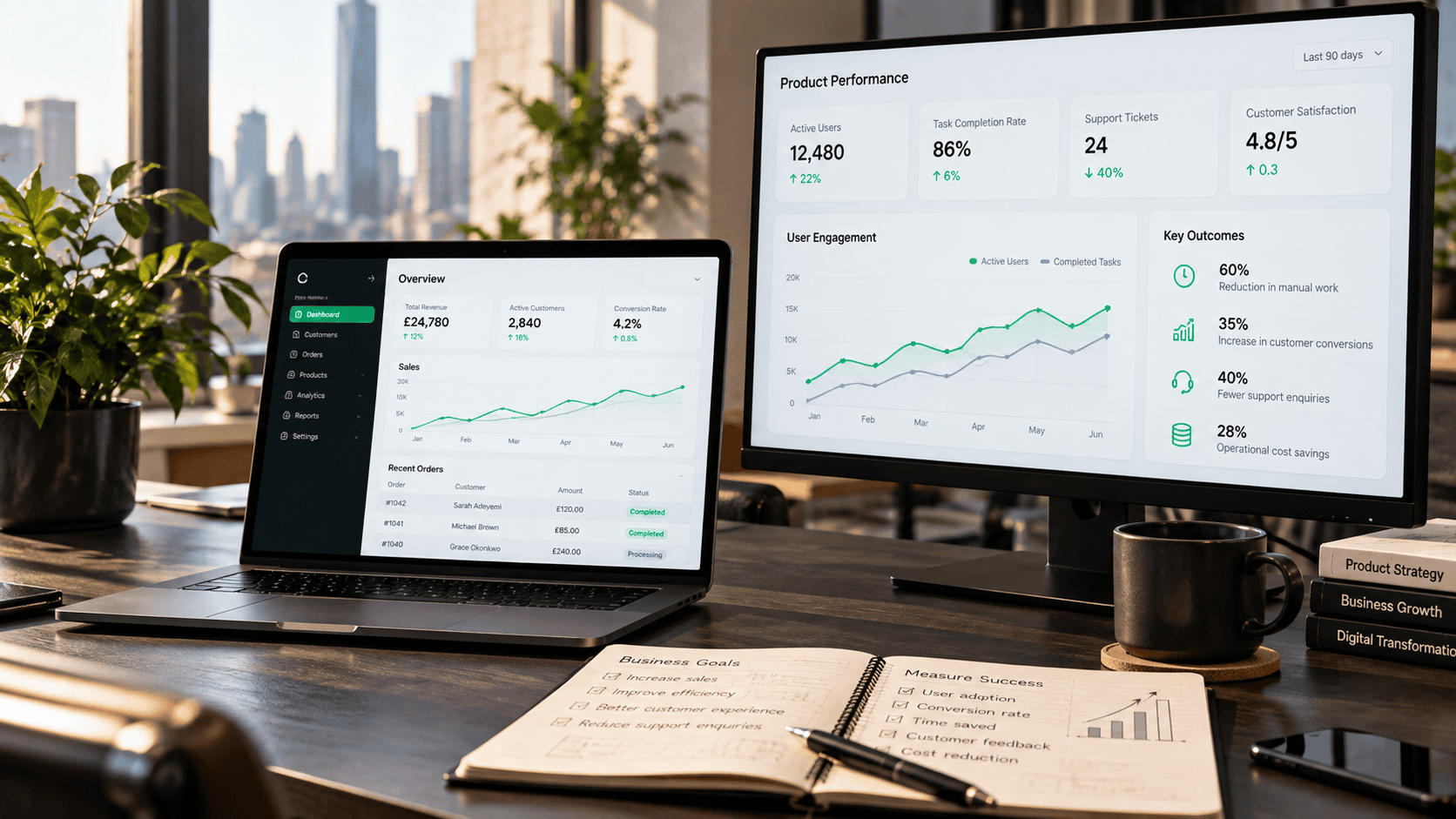
Have you ever invested in a new website, mobile app, or business management system and wondered whether it was actually worth it?
Perhaps the website looks great. The app has all the features you requested. Your team has spent months working with developers, and finally, the product is live.
Everyone celebrates the launch. And rightly so.
But a few months later, you find yourself asking a different question: What has this software actually changed for my business?
Are customers finding it easier to do business with you? Is your team saving time? Are you reducing operational costs? Has your business grown in a way that justifies the investment?
These are the questions that matter.
At Seacom Soft, we believe that successful software development should be measured by more than the number of features delivered or whether a project was completed on schedule. What matters is how well the solution addresses a real business problem and the difference it makes after launch.
Building Software Is an Investment, Not Just a Project
When businesses invest in software, they are investing more than money. They are committing time, people, and resources to a solution they expect to make something better.
That expectation should guide the entire development process.
A business might request an automated booking system because staff spend too much time managing appointments manually. Another might need a customer portal because customers frequently call to ask for updates. A growing company might want a custom management platform because its existing tools no longer support its operations.
In each case, the software is the solution, but the business problem is the reason for building it.
If the booking system does not reduce the time spent managing appointments, the customer portal does not reduce unnecessary enquiries, or the management platform makes everyday work more complicated, then simply delivering the requested features is not enough.
The real question is whether the investment achieved what the business needed it to achieve.
So, How Can Businesses Measure the Success of Their Software?
The good news is that you do not need complicated reports or dozens of metrics to understand whether your software is working. You need to know what you wanted to improve and identify meaningful ways to measure that improvement.
Here are five places to start.
1. Measure the Problem You Wanted to Solve
Before developing software, be clear about the problem you are trying to address.
If your team spends too much time processing orders manually, measure how long the process currently takes. If customers regularly abandon purchases, understand where they drop off. If employees struggle to find information, assess how much time they spend searching for it.
Once the software is introduced, compare the results with where you started.
For example, imagine that processing an order takes 20 minutes because employees must manually enter information into different systems. After introducing an integrated order management solution, the process takes eight minutes.
That is a measurable improvement. Your team now spends less time on repetitive work and has more time for other important tasks.
Without a starting point, it becomes difficult to tell whether the software has genuinely made a difference.
2. Look at How Customers Behave
A product can have an attractive design and impressive features but still frustrate the people it was built for.
That is why customer behaviour is an important measure of success.
Consider questions such as:
- Are more visitors completing purchases or enquiries?
- Can customers complete important tasks without assistance?
- Are fewer people abandoning the process halfway through?
- Are customers returning to use the product?
- Are complaints about the same problems becoming less frequent?
For instance, if customers previously had to call your business to complete a simple transaction, but can now do it independently through your app, that is progress.
The goal is not simply to get customers to use the software. It is to make the experience useful enough that they can achieve what they came to do.
3. Measure the Time and Money Saved
One of the most valuable things software can do for a business is reduce unnecessary work.
Manual data entry, repeated administrative tasks, disconnected systems, and avoidable errors all consume resources. Over time, those costs can add up.
Businesses should therefore look at whether their software is helping them reduce the number of manual steps in a process, spend less time correcting errors, lower avoidable operational expenses, process more orders with existing resources, and improve coordination between departments.
Imagine your employees spend ten hours each week preparing reports manually. If a reporting tool reduces that work to two hours, the business saves eight hours every week.
That time has value. It can be redirected towards customer service, business development, or other activities that contribute to growth.
Software success is not always about generating more revenue immediately.
Sometimes, it begins with helping a business use its existing resources more effectively.
4. Connect Software Performance to Business Goals
Ultimately, software should support the direction in which your business wants to grow.
If your priority is increasing sales, look at conversion rates, completed transactions, and revenue attributable to the relevant customer journey. If you want to improve customer retention, examine repeat purchases, renewal rates, and customer feedback. If you want to expand operations, assess whether your systems can support more customers, transactions, or employees without creating unnecessary complexity.
The important thing is to choose measures that reflect your actual business objectives.
Not every product needs to be judged by the same numbers. A customer-facing mobile app, an internal operations platform, and an e-commerce website serve different purposes, so their measures of success should differ too.
The right metrics are the ones that help you understand whether your software is moving your business in the right direction.
5. Keep Learning After Launch
Launching software is an important milestone, but it should not be the end of the conversation.
Once people start using a product, you begin to learn things that may not have been obvious during planning and development. Customers might struggle with a particular feature. Employees might discover a faster way to complete a task. A process you expected to improve might remain unchanged. You might even discover that a feature you considered essential is rarely used.
These findings are valuable.
They help you decide what needs fixing, what deserves improvement, and what should take priority next. Sometimes, they also show that an original assumption was wrong—and learning that early can prevent further investment in the wrong direction.
Successful software evolves as the needs of the business and its customers change.
Why the Right Software Development Partner Matters
Measuring success is easier when you work with a development partner that understands what your business is trying to achieve.
A good software development agency should do more than take a list of requirements and turn them into code. It should help you think through the problem, understand your users, identify priorities, and make informed decisions about what to build.
This is where Seacom Soft comes in.
We Start With the Problem, Not Just the Feature List
Every business has its own challenges, customers, and priorities. Before deciding what a solution should look like, it is important to understand what needs to change.
At Seacom Soft, our approach is centred on understanding the business need behind the requested solution. This helps establish a clearer direction for the project and keeps the focus on delivering something useful.
We Help Turn Business Needs Into Practical Solutions
It is one thing to identify a problem; it is another to translate it into a product that people can actually use.
Software development involves decisions about functionality, user experience, requirements, priorities, and technical implementation. These decisions should work together to support the intended outcome.
By keeping the business objective in view throughout development, Seacom Soft can help clients make more informed choices about their software requirements and priorities.
We Encourage a Focus on Value, Not Unnecessary Complexity
More features do not automatically make a product better.
Sometimes, the most effective solution is a straightforward system that solves a specific problem reliably. In other cases, a business may need a more extensive platform with integrations, automation, or additional functionality.
The key is understanding what is necessary now, what can wait, and what will deliver meaningful value.
A disciplined approach to scope and priorities helps businesses make better use of their development budgets.
We Recognise That Launch Is Only One Milestone
A software product enters a new phase when real users begin interacting with it. Their experiences, feedback, and behaviour can reveal opportunities for improvement.
Businesses should be prepared to review performance, address issues, and adapt their products over time.
Seacom Soft aims to help businesses approach software as a tool for solving evolving business needs, not simply as a project to complete and move on from.
Choosing a development partner should ultimately come down to the quality of its work, its understanding of your needs, how clearly it communicates, and whether it can help you achieve your goals. These are the standards worth discussing with any agency you consider, including Seacom Soft.
Before You Build Your Next Feature, Ask These Questions
Whether you are planning a new product or improving an existing one, take a moment to consider:
- What problem are we solving? Can we explain it clearly?
- Who benefits from this change? Is it our customers, our employees, or the business as a whole?
- What should improve? Are we expecting to save time, reduce costs, increase sales, or improve the customer experience?
- How will we measure the result? What information will tell us whether the change worked?
- When will we review the outcome? Have we agreed on when to check whether the expected improvement happened?
These questions can help you make more deliberate decisions about where to invest in software and how to evaluate the results.
The Real Measure of Success
A software project can be delivered on time, stay within budget, and include every requested feature. Those are important achievements, but they do not tell the whole story.
The bigger question is what happens next.
Does the software make work easier? Does it help customers get things done? Does it reduce waste, improve decisions, or create opportunities for growth?
Sometimes, success means increasing revenue. Sometimes, it means fewer errors, happier customers, or hours of work saved every week. And sometimes, it means learning what needs to change before investing further.
Whatever the outcome, businesses should be able to connect their investment in software to a meaningful result.
At Seacom Soft, we believe technology should serve a purpose beyond simply existing. It should help businesses solve real problems, work more effectively, and create better experiences for the people they serve.
So, before asking how many features your next software project will deliver, ask a more important question: what do you want those features to change?
That is where meaningful software development begins.
Ready to build software around your business goals? Talk to Seacom Soft about the challenges you want to solve and the outcomes you want to achieve.