Every business leader wants to make better decisions.
Whether it’s deciding which market to enter, which technology to invest in, how to improve customer experience, or when to hire the next employee, every decision has consequences. Some shape the future of an organisation for years, while others quietly influence day-to-day operations without anyone noticing.
Yet something has changed over the past decade.
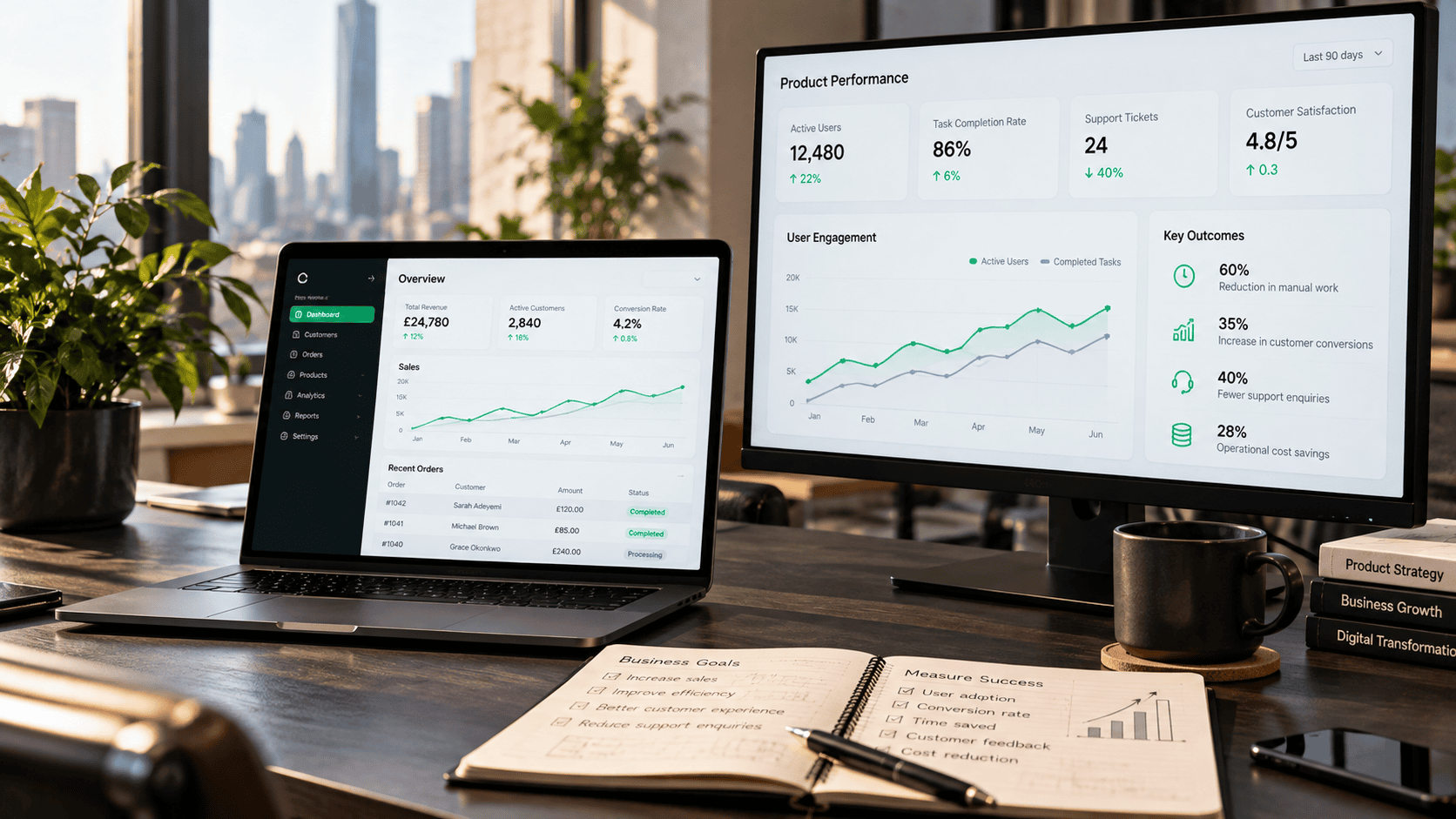
Businesses have never had access to more information than they do today. Dashboards update in real time. Customer feedback arrives instantly. Financial reports are generated automatically. Artificial intelligence can analyse thousands of data points in seconds. Every department has software designed to measure performance, identify trends, and improve decision-making.
Ironically, many leaders have never found decision-making more difficult.
The problem isn’t a lack of information.
It’s the overwhelming amount of it.
When Information Becomes Noise
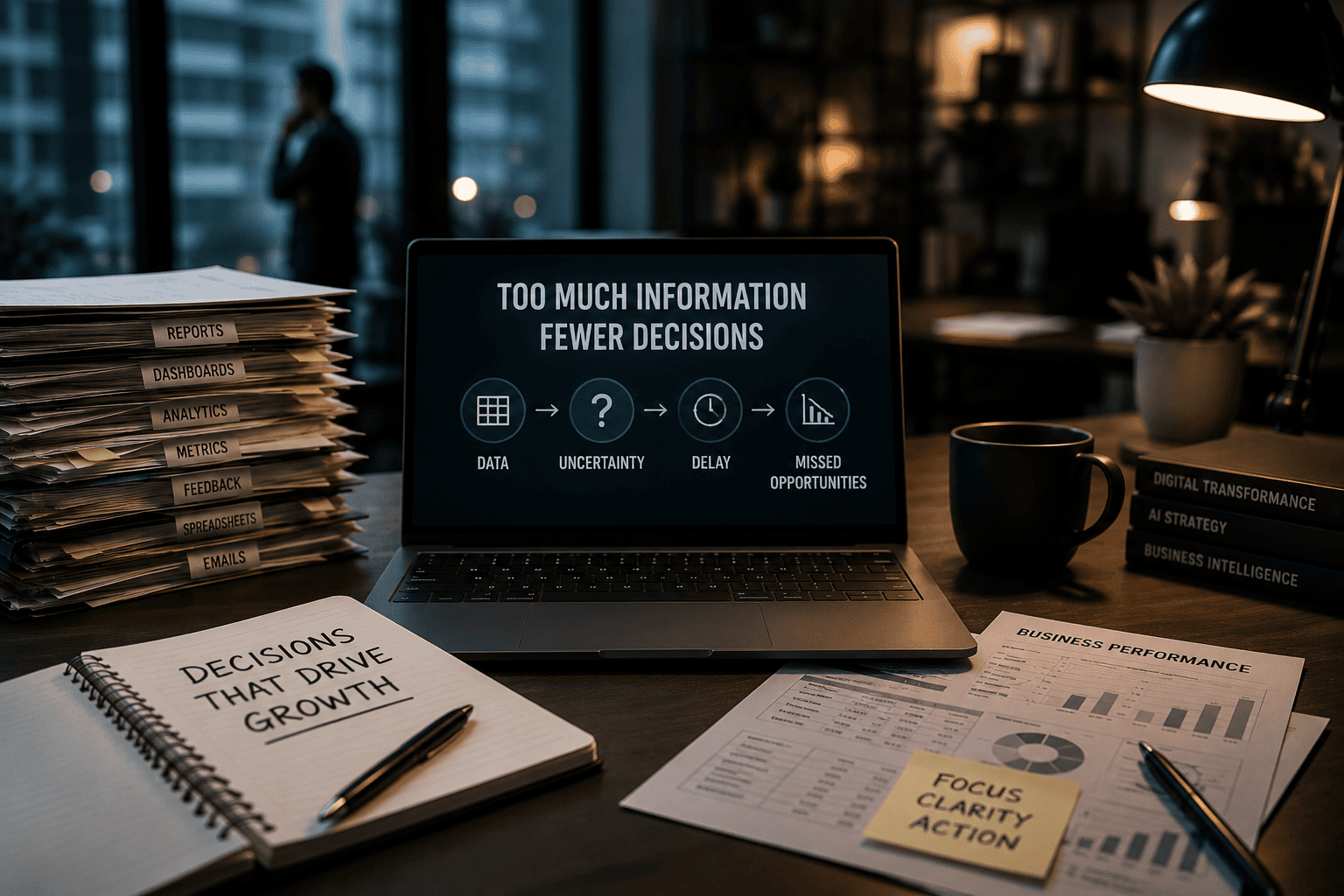
Technology has transformed the way organisations operate. Businesses now collect information from almost every interaction, from website visits and customer purchases to employee productivity and operational performance. Every click, transaction, and conversation contributes to an ever-growing pool of data.
In theory, this should make leadership easier.
In reality, it often creates the opposite effect.
Information becomes scattered across multiple platforms, departments rely on different reports, and leadership teams spend more time interpreting conflicting data than making confident decisions. Sales teams work inside CRM platforms, finance departments rely on accounting software, marketing teams analyse campaign dashboards, while operations monitor entirely different systems.
Everyone has information.
Very few have clarity.
As the volume of data increases, so does the mental effort required to process it. Leaders find themselves switching constantly between dashboards, reports, meetings, emails, and notifications, all demanding attention at the same time.
Eventually, every additional decision becomes harder than the last.
This is decision fatigue.
The Decisions You Don’t Make Can Be the Most Expensive
Businesses often worry about making the wrong decision.
Far fewer consider the cost of making no decision at all.
Delays rarely feel dangerous in the moment. A software upgrade gets postponed until next quarter. A manual process remains in place because “it still works.” Customer feedback is acknowledged but not acted upon. Teams continue using disconnected systems because replacing them feels like a bigger project than anyone wants to tackle.
Individually, these decisions seem harmless.
Collectively, they slow an organisation down.
While one business debates its next move, another has already implemented improvements, streamlined operations, and responded to changing customer expectations. Competitive advantage is rarely created through one revolutionary decision. More often, it is built through hundreds of small decisions made consistently over time.
Waiting has a cost.
It simply doesn’t arrive as an invoice.
Why More Technology Isn’t Always the Answer
When organisations recognise inefficiencies, the instinct is often to purchase another tool.
A new CRM.
A reporting platform.
An automation solution.
Another dashboard.
Sometimes these investments deliver value. More often, they introduce another system that employees must learn, maintain, and integrate into their daily work.
Technology should simplify complexity, not increase it.
The organisations gaining the greatest advantage from digital transformation are not necessarily using the largest number of tools. They are using technology intentionally. Their systems communicate with one another, repetitive work is automated, and information flows naturally between departments instead of becoming trapped inside isolated platforms.
Good technology reduces friction.
Great technology removes it altogether.
Artificial Intelligence Changes the Conversation
Artificial intelligence has introduced a new chapter in business decision-making, but its greatest value isn’t replacing people.
It’s helping people think more clearly.
Rather than asking employees to analyse thousands of rows of data manually, AI can identify meaningful patterns within seconds. It can highlight unusual customer behaviour, detect operational inefficiencies, forecast future demand, and surface insights that might otherwise remain hidden.
This doesn’t eliminate the need for leadership.
It enhances it.
The role of AI is not to make decisions on behalf of organisations. Its role is to remove unnecessary cognitive load, allowing leaders to spend less time searching for information and more time applying judgement, creativity, and experience.
The businesses benefiting most from AI understand this distinction.
Technology supports human intelligence.
It doesn’t replace it.
Integration Is the Competitive Advantage Few Businesses Talk About
Many organisations already own the software they need to become more efficient.
What they often lack is connection.
When accounting systems, customer databases, project management platforms, inventory software, and communication tools operate independently, information becomes fragmented. Teams spend valuable hours moving data between systems, reconciling reports, and verifying information that should already be consistent.
The issue isn’t the quality of the software.
It’s the lack of integration.
Businesses that connect their systems create something far more valuable than efficiency. They create clarity. Leaders gain a unified view of operations, departments collaborate more effectively, and decisions are made using consistent, reliable information rather than assumptions or incomplete reports.
The difference is subtle.
The impact is enormous.
Where Seacom Soft Fits In
At Seacom Soft, we believe technology should make businesses easier to run, not more complicated.
Whether we’re developing custom software, implementing artificial intelligence, strengthening cybersecurity, integrating enterprise systems, or supporting digital transformation initiatives, the objective remains the same: helping organisations make better decisions through technology that works together seamlessly.
Every solution begins with understanding the business itself. Only then can technology be designed to remove inefficiencies, improve collaboration, and create measurable value.
Because digital transformation isn’t about buying more software.
It’s about building better systems.
Looking Ahead
As technology continues to evolve, the organisations that thrive will not necessarily be those with the largest budgets or the newest platforms.
They will be the businesses that consistently make better decisions because they have the right information at the right time.
Technology will continue generating more data than ever before, but competitive advantage will belong to organisations that can transform that information into clarity. Those businesses will respond faster to change, identify opportunities earlier, and adapt with greater confidence than their competitors.
The future doesn’t belong to companies with the most data.
It belongs to companies that know what to do with it.
Final Thought
Every organisation accumulates information.
Far fewer transform it into understanding.
The businesses that lead tomorrow will not simply invest in more technology. They will invest in technology that reduces complexity, connects people, and supports confident decision-making.
Because in the end, sustainable growth isn’t driven by the number of tools a business owns.
It’s driven by the quality of the decisions those tools help people make.